

The Fun of Growing up – On Mother Humpbacks Raising Their Calves and Forming Social Bonds
Written By: Charline Wolff
The sun was shining on the research station’s deck as the preparations for our land-based scans started. I grabbed the notepad, binoculars, and put on a hat for sun protection. In the background the sound of small waves hitting the rocky shore and the smell of sunscreen and salt was in the air. It was a quiet day with most of the crew on the water conducting a marine survey, myself the only human on Fin Island.
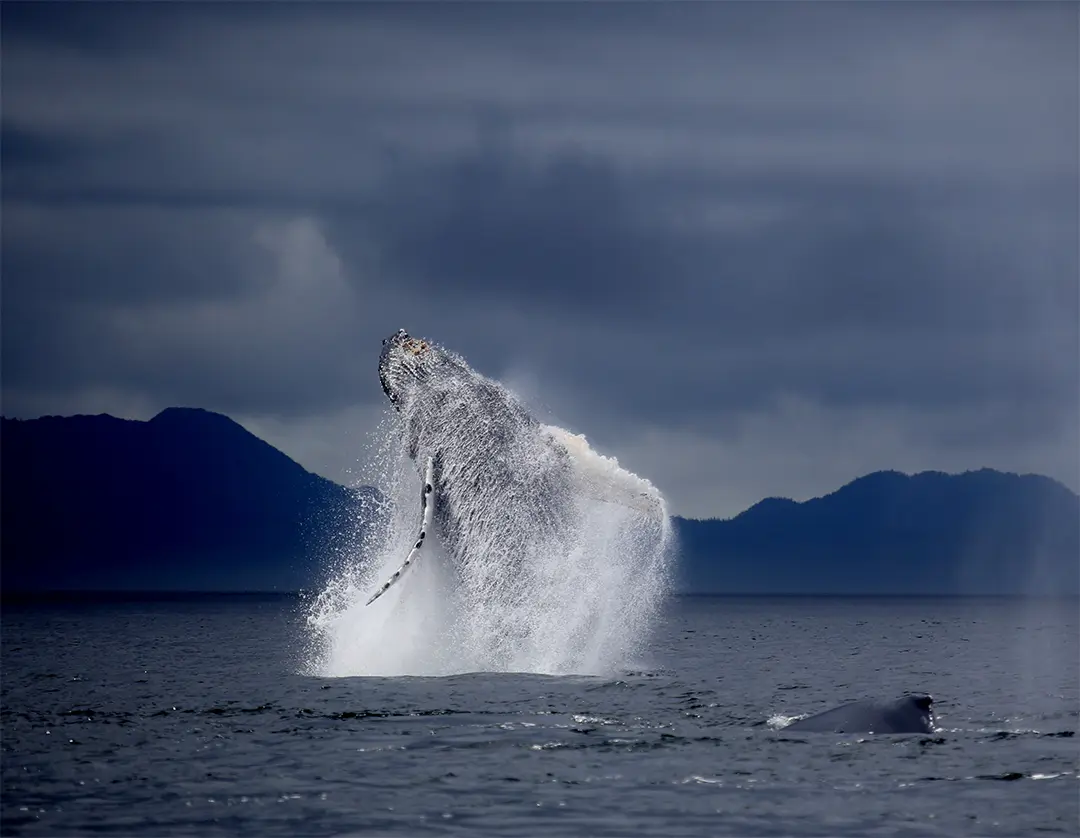
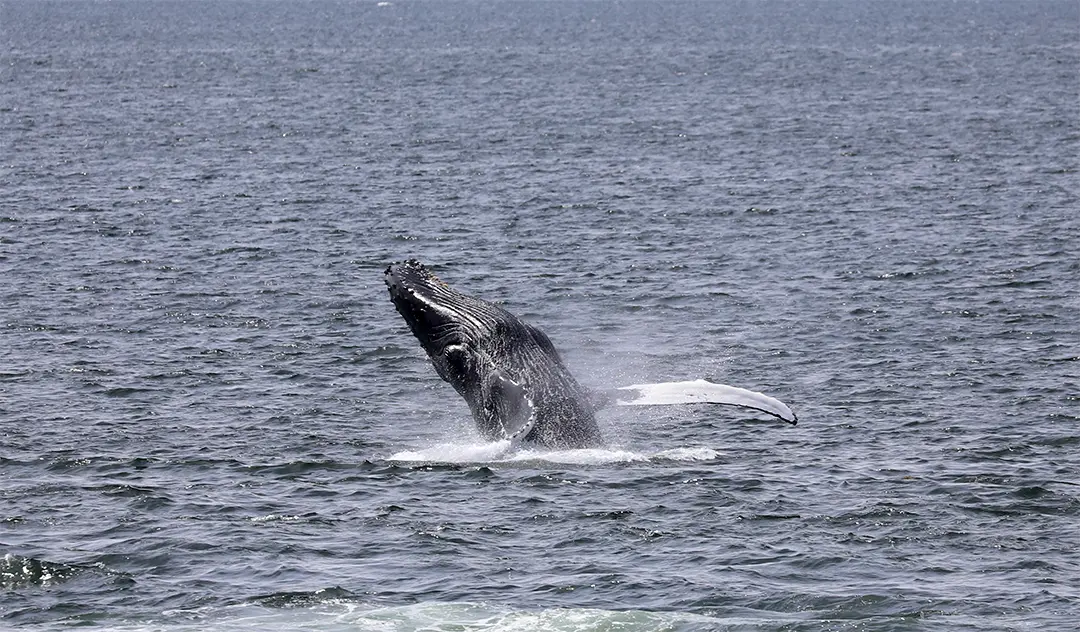
Humpback breaching near calf. Photo by © BC Whales
It was a loud crash of a splash that immediately directed my attention onto the rippling waters not far offshore – and there they were: a pair of mother and calf humpback whales, both taking a breath before sliding back into the cold waters of BC’s north coast.
Oftentimes, humpback mothers are among the first individuals we document arriving back to Gitga’at First Nation Territory in late spring. They are returning from their annual migration with their calves from their breeding grounds in Hawaii or Mexico. During this time, in the warmer southern waters, humpback whales do not feed, which translates to almost half a year without food whilst giving birth and nursing their calves. Calves nurse for approximately 6 to 7 months, therefore, it is particularly important for the mothers to reach the nutrient rich feeding grounds of BC early to replenish their depleted fat reserves. In late fall and winter pregnant females regularly leave the coast of BC last to put on some additional weight for the long migration back south and another 6 months of fasting.
Today we recognized this mother as “Meadow“(BCX1185), and along her side was a new calf. They were the first whales seen returning to these waters for the 2026 season.
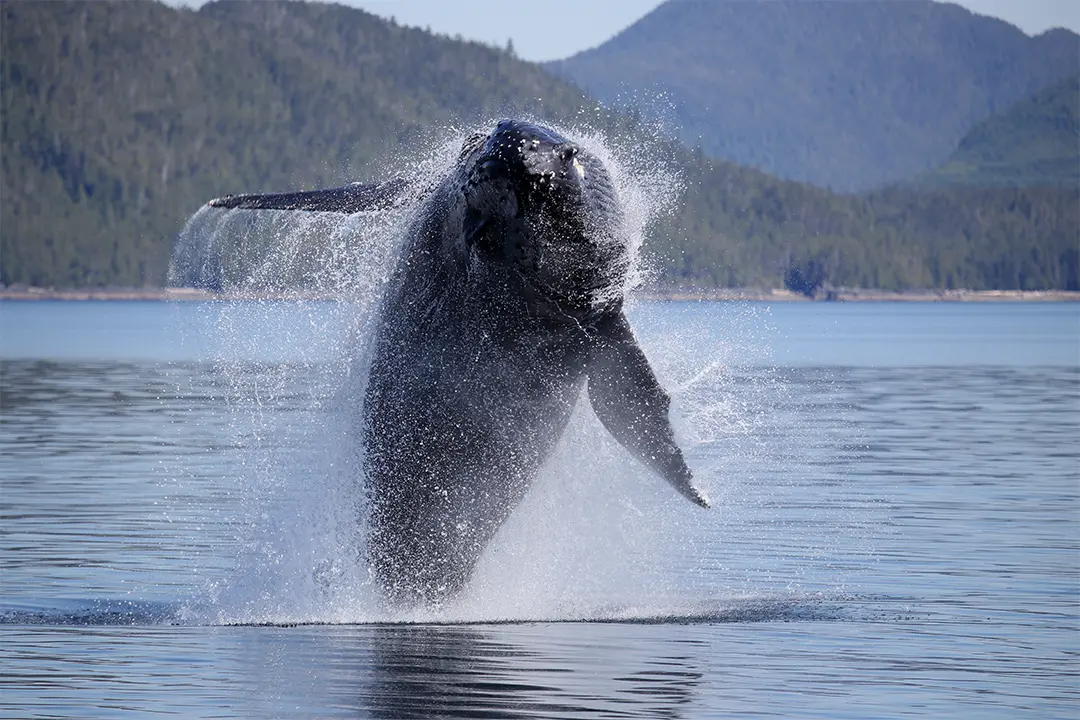
While passing the cabin, both whales breached, the air filled with the mist of the whale ‘s blows, and the sound of their bodies colliding with the surface of the water, all heard alongside the continuous clicking of pressing the camera shutter. As the pair started to change directions, away from the cabin, the calf alternated between breaching and head lobbing.
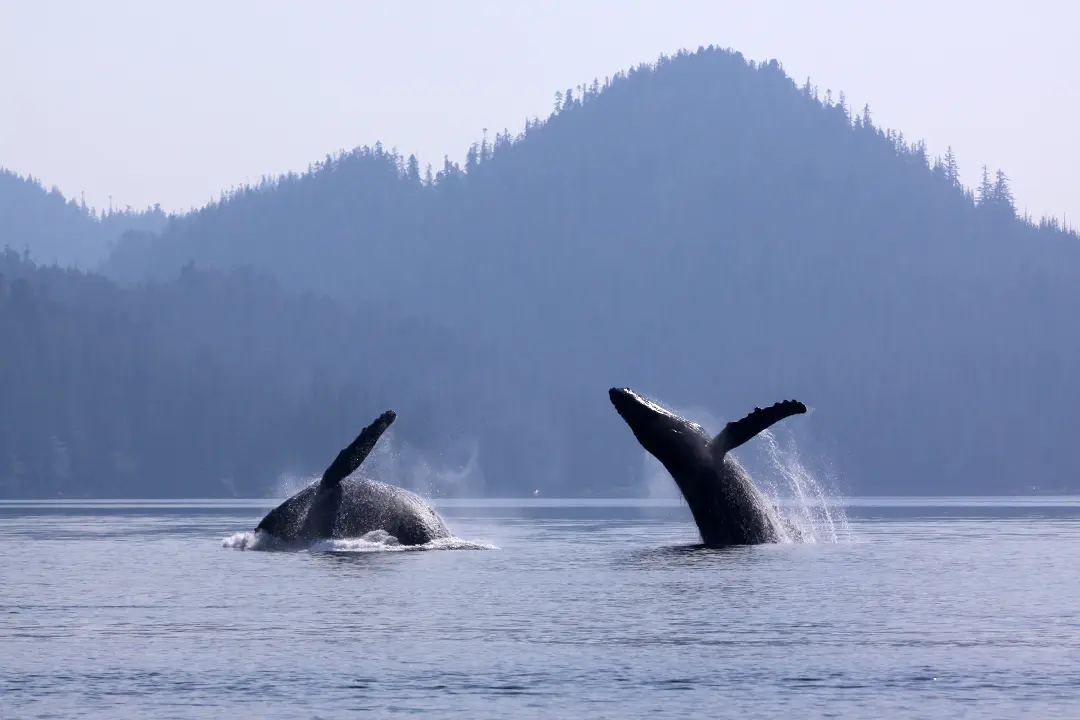
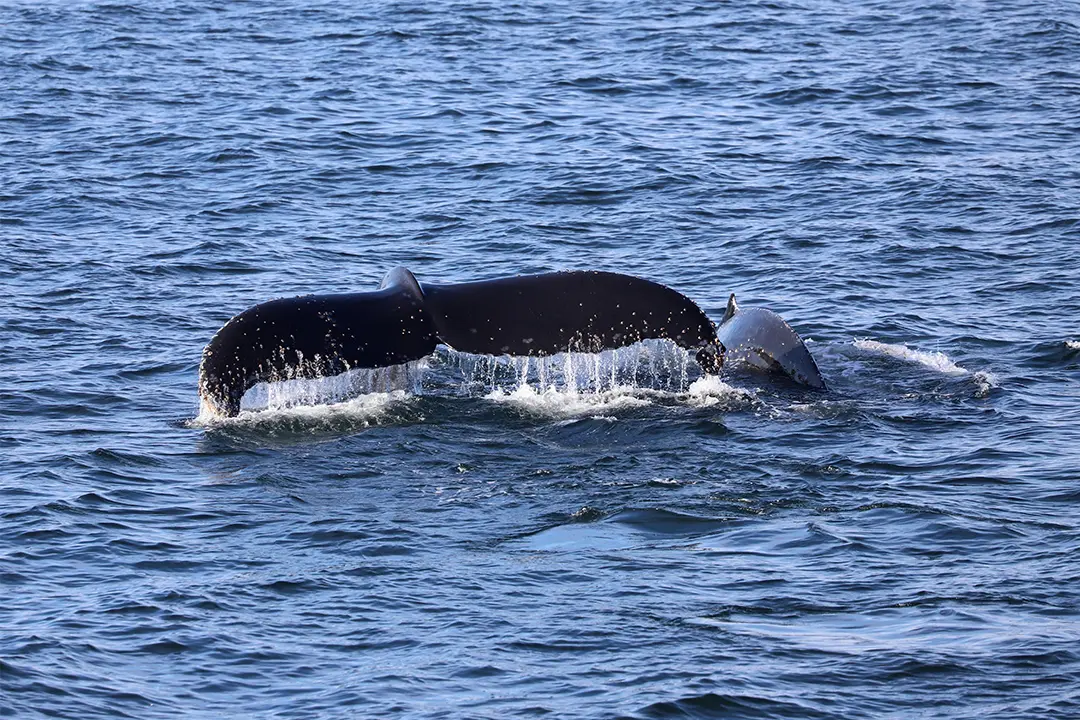
The focus from this group shifted suddenly when the “woosh “of a blow erupted close to the cabin once again. Sure enough, another mother-calf pair broke through the water’s surface further west, about 200 meters away from the first humpback pair. A few minutes later the second calf started breaching as well while its mother slapped her tail, and tail lobbed – this basically looks like a whale cartwheeling! This behaviour allowed us to see this second humpback mothers fluke and identify her. It turned out to be a very well-known whale to this area, named “Bishop “(BCY0313) that has been sighted in these waters for over 20 years during the summer and fall months.
Then something remarkable happened: The calves adjusted their direction and started breaching towards each other until both pairs joined. Both calves kept breaching close to each other while Meadow and Bishop stayed nearby. A beautiful observation which makes one wonder whether this interaction was something along the lines of a humpback whale version of a playdate, with young whales beginning to form their own social bonds.
Interestingly though, it has been documented on several occasions that known female humpback whales will travel alongside other mothers with a calf in the years that they themselves did not give birth. This goes to show that there is still a lot to uncover regarding the bond between mother and calf, as well as the relationships between adult whales that spend their time together.
Ultimately, each mother-calf pair went their own way again, leaving me with a full heart and in awe with what I just witnessed. I’m grateful to be able to make land-based observations like this without causing any disturbance to the whales or having any impact on them – just a silent bystander taking in the beauty and mystery of these beautiful creatures.
Related Posts

The ocean is clear and still. You are gazing out from a thin wooden deck of a rough strewn cabin, upon a rocky outcrop over looking Squally Channel, near Hartley Bay on the northwest coast of British Columbia (BC). Illuminous green kelp grasp the rocks at the ever ebbing shore line (you will later harvest this to eat with dinner) and green untouched pine forests frame the scene. No, you are not gazing into the latest ‘10minute daily meditation’ iPhone app. This is blissful Canadian wilderness. This is Fin Island.

I can say with certainty that anyone who’s encountered a whale here, whether at Whale Point, the Wall, onboard the Elemiah, or otherwise, knows that there is a deeper meaning to the word “whale” than the Oxford English Dictionary’s very dry“a very large marine mammal with a streamlined hairless body, a horizontal tail fin, and a blowhole on top of the head for breathing.”

The silence settled around us comfortably as we tried to absorb the sights and sounds engulfing every cell of our bodies. The sun began to set and the whales continued to come, fluking into the golden light and disappearing into the ocean’s depths as the sun sunk lazily below the horizon. As the light began to fade and the stars began to shine, the whales’ breath continued to punctuate the spell of the silent night. It was difficult to truly comprehend what was happening that night, as each of us tried to really feel this moment, one which no doubt would stay with us all for years to come.


