

Breath to Genome: Whole Genome Sequencing of Large Whales From Blow Sampling
AUTHORS: Éadin N. O ‘ Mahony, Morgan L. McCarthy, Eric M. Keen, Janie Wray, Christie J. McMillan, Sheila J. Thornton, Luke E. Rendell, Oscar E. Gaggiotti and Morten Tange Olsen
PUBLICATION: Molecular Ecology Resources
Abstract: Preserving biodiversity requires the genetic monitoring of wild populations, which is traditionally done through invasive sampling techniques for DNA collection. However, this approach can impact animal welfare or be impossible to implement due to behavioural responses to anthropogenic factors or national/international legislation. For cetaceans, a promising non-invasive alternative approach is the collection of exhaled respiratory vapour, or ‘blow’, to generate individual genetic profiles. Here, we demonstrate the feasibility of generating whole nuclear and mitochondrial genomes from the blow of humpback whales ( Megaptera novaeangliae ) with data of sufficient quality for population genomics. A total of 58 blow samples from 26 Northeast Pacific humpback whales were collected in Gitga’at First Nation territory using a commercially available drone. The high endogenous DNA content at 84% on average allowed us to generate low-coverage nuclear genomes (mean 2.3×, range 0.2× to 3.5×) and high-coverage mitochondrial genomes (mean 94×, range 7.7× to 151.3×) for inference of population structure, diversity and phylogenomics. The reliability of the blow-derived genomes was demonstrated by direct comparison between replicate blow samples, as well as paired tissue samples from a subset of individuals. Although applicability will likely vary across species depending on factors such as elusiveness, body size and surface time, this approach represents a major step towards non cetacean sampling that can yield not only host genomes but also microbiome and hormone profiles. As such, our approach opens new avenues for conservation genomics, population monitoring and microbiome-based health assessments in the wild and can fill critical data gaps in cetacean genomic databases.
Related Posts
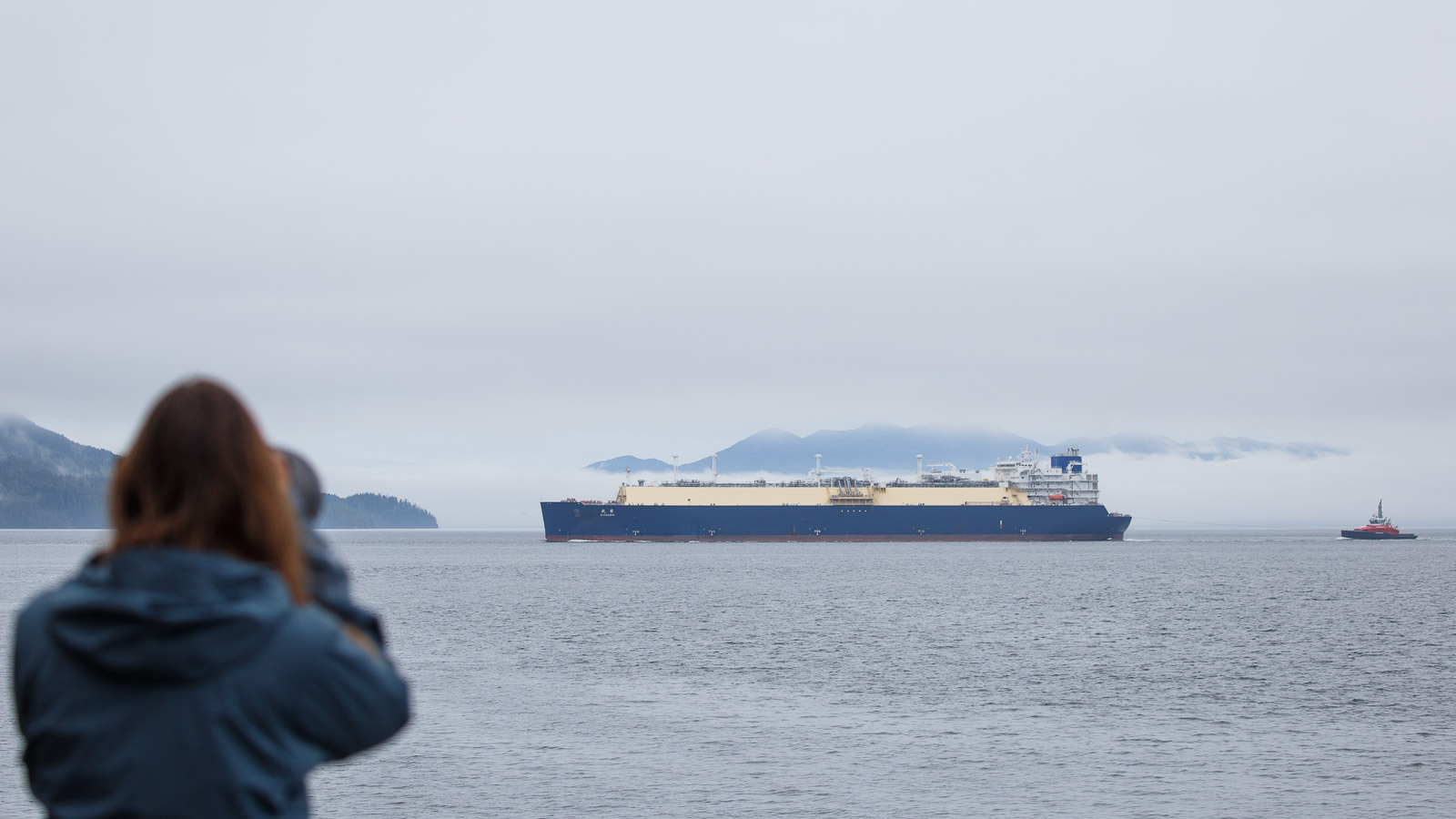
Collisions with vessels (vessel-strikes) are one of the largest threats to the recoveries of baleen whale populations worldwide. Vessel-strike vulnerability is complex, depending on a vessels size and speed, and the presence, position, visibility, and movement of whales. To date, discrete behaviour states have not been considered in strike risk analyses.

In BC waters humpback whales are known to bubble net feed, where groups of whales work together to trap fish inside spirals of bubbles. Over 20 years of observation, we documented the spread of this behaviour through the north coast population.

Quantifying underwater vessel noise in marine ecosystems is challenging, due to difficulties in accounting for small, not publicly tracked boats, creating a knowledge gap in marine management.


